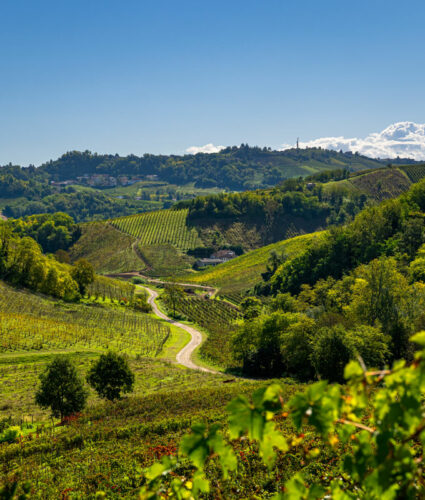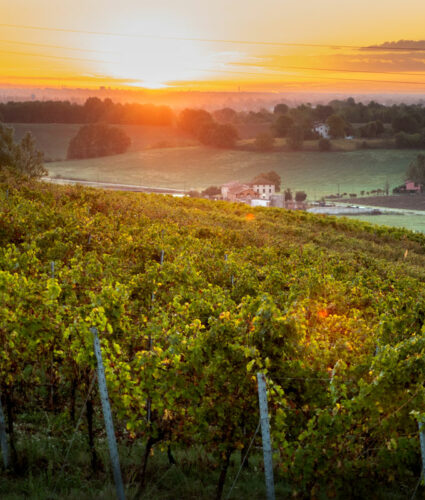
Oltrepò Pavese is a land of great wines and, above all, the Italian homeland of Pinot Noir, thanks in part to soils especially rich in limestone formations, much like the world’s most prestigious wine regions that interpret this grape in still red wines or Metodo Classico.
On this basis, the soils show great variety, also because of the area’s size, favouring the cultivation of different varieties, first and foremost Croatina, of which Oltrepò Pavese is the undisputed home.
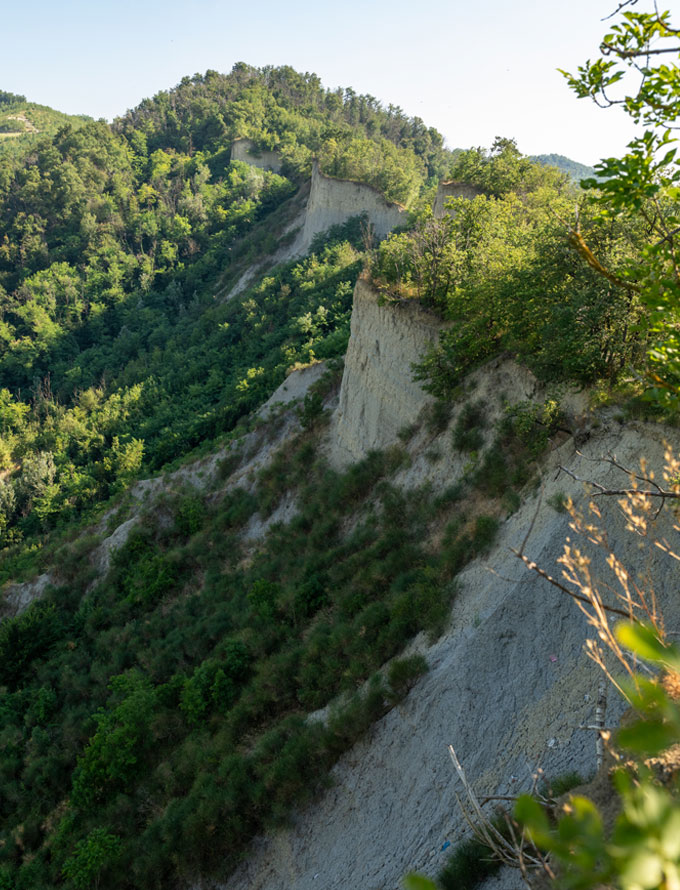
The soils of Oltrepò Pavese have ancient origins: they were once the floor of a tropical bay, whose waters retreated millions of years ago, revealing the Apennines and shaping today’s hills and valleys.
These soils are rich in limestone and often contain marine fossils, witnesses of the sea that once covered them. Their texture is predominantly fine, with areas of more loamy texture, medium to high depth and almost always little stoniness, features that influence fertility and drainage. The climate is continental yet mild, with cold winters and warm summers, constant ventilation and moderate rainfall, slightly higher from west to east.
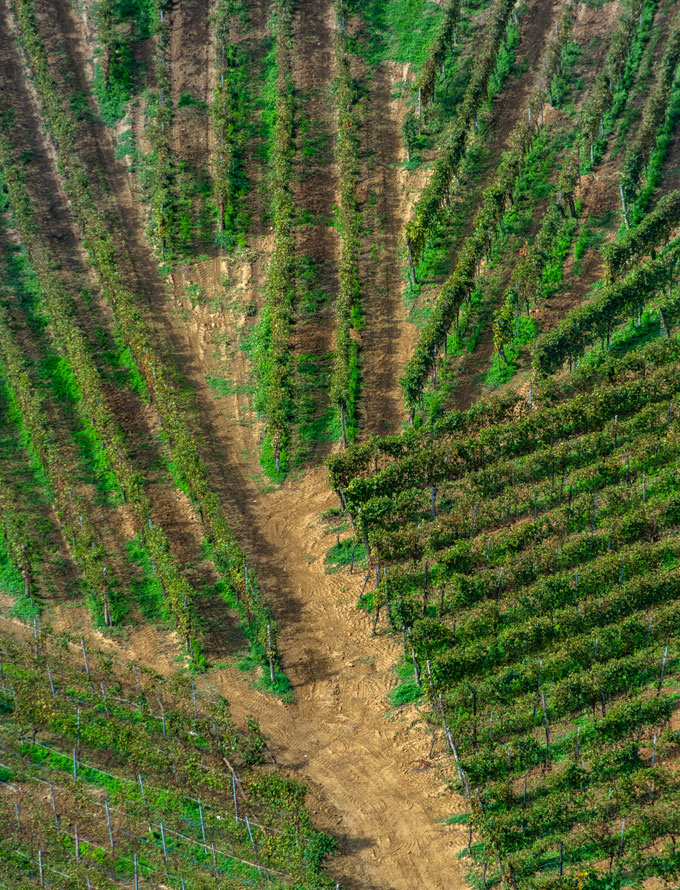
The hilly soils of Oltrepò Pavese, of Cenozoic origin, show great geological variety. Miocene formations prevail, especially Messinian soils rich in calcareous marls, which are highly suited to quality viticulture. Pliocene, Oligocene and Eocene soils are also present, made up of clays, sandstones and marl-limestone layers similar to those found in major European wine regions.
Despite the area’s high geological complexity, from an agricultural point of view the vineyard soils can be grouped into six main types, allowing for strong diversification of vineyards and wines closely tied to the territory.
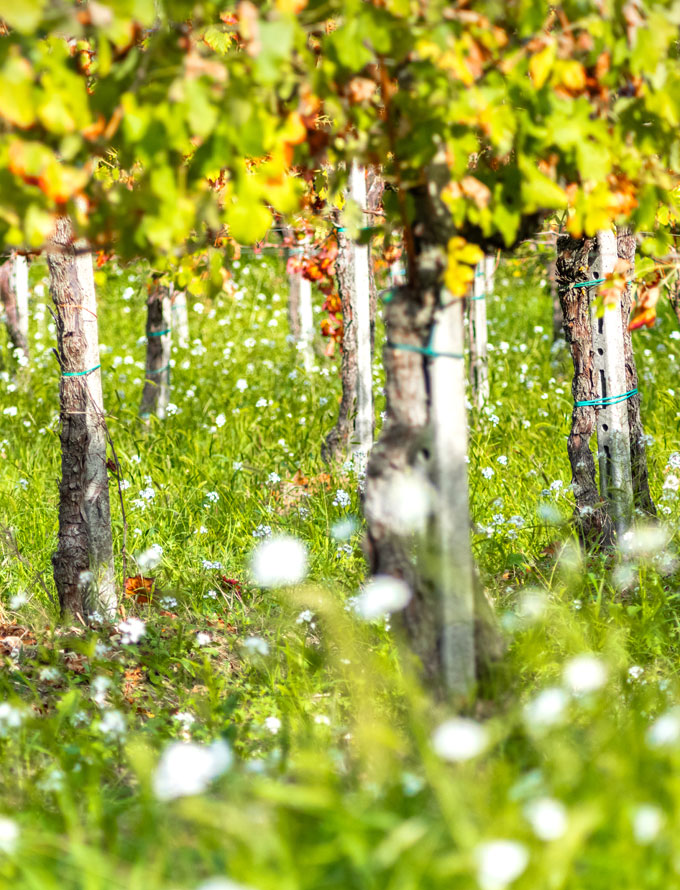
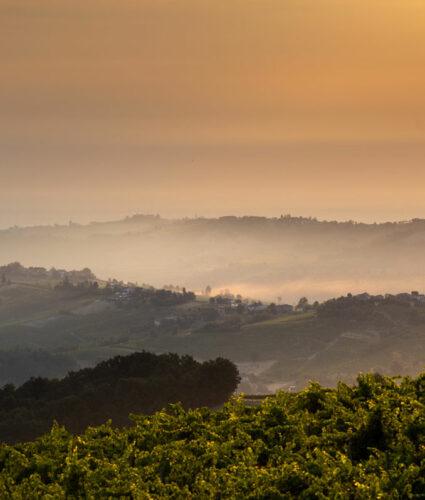
Oltrepò Pavese is an Apennine hill territory within the Po Valley basin, characterised by valleys running predominantly south to north, which influence exposure, sunlight and microclimates. Solar radiation is unevenly distributed, creating different viticultural vocations between the eastern and western areas. The hill climate, with average annual temperatures around 11–12 °C, good temperature swings and variations linked to altitude and thermal inversions, is overall highly favourable to viticulture.