
In the first millennium BC, Oltrepò Pavese was inhabited by Celto-Ligurian peoples, divided into autonomous tribes settled in the Apennine valleys, which made the Roman conquest, begun in the 3rd century BC, slow and complex.
The Romans founded strategic colonies such as Placentia, Derthona, Clastidium and Iria; during the imperial period the territory was divided between Aemilia and Liguria, with a wine tradition already in place before Romanisation.
After the barbarian invasions, in the early Middle Ages Oltrepò entered the orbit of the Lombard kingdom, with Pavia as its political centre of reference.
During the Middle Ages, the territory was controlled by major royal monasteries, but soon became part of the vast possessions of the Abbey of Bobbio, which under Abbot Attala gained enormous political and cultural prestige.
The Abbey of Bobbio played a decisive role in the development of fruit growing and viticulture; Saint Columbanus’ Burgundian experience deeply influenced local agricultural practices.
After the Frankish conquest, the Obertenghi emerged, from whom important European dynasties were born; in Oltrepò, the Malaspina rose to prominence, promoting castles and abbeys, including Sant’Alberto di Butrio, a place steeped in art and legend.
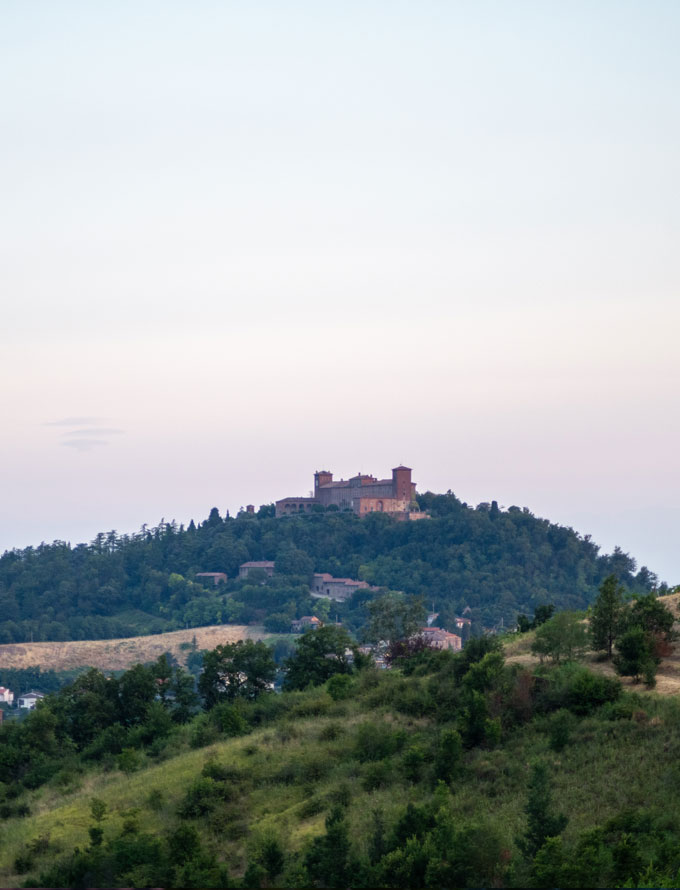
From the 12th century onward, Pavia’s control over Oltrepò was definitively consolidated, alongside the local dynasties and with the support of Frederick Barbarossa, who in 1164 confirmed the Malaspina fiefs and expanded Pavia’s rights.
From this phase emerged the nucleus of the future Principality of Pavia, tied to the Duchy of Milan.
The territory of Ultrapadum Ticinensis was divided into two areas:

The territorial arrangement remained unchanged until 1743, when the Treaty of Worms separated Oltrepò from the Principality of Pavia, assigning it to the House of Savoy and opening the period of Old Piedmont.
The new division created trade tensions, especially around wine, which was penalised by duties between the Lombard and Piedmontese areas, confirming Oltrepò’s central economic role.
In the modern age, intensive viticulture became established and in the 19th century Pinot Noir arrived, enriching an already broad grape heritage.
In the mid-19th century, Counts Gancia and Vistarino travelled to Champagne and Burgundy to study French winemaking, returning with Pinot Noir cuttings planted in Rocca de’ Giorgi. In those years of great ferment, Gancia produced the first Italian Metodo Classico in 1850, using Count Vistarino’s Pinot Noir. In 1865 Augusto Giorgi di Vistarino created his own Metodo Classico: the first blanc de noirs from Oltrepò Pavese. From there begins the story of the great wine of Oltrepò.
Montelio “champagne” is used for the launch of the steamship Vesuvio;
La Versa is founded, an iconic name in Italian Metodo Classico;
SVIC is founded; five years later, in 1912, it promotes its wines with a large advertisement at the foot of the Statue of Liberty in New York;
A La Versa Metodo Classico wins first prize and the gold medal at the Asti wine competition;
The first Oltrepò Pavese DOC is recognised;
The Consortium for the protection of Oltrepò Pavese wines is founded;
The Association of Classese Producers is founded;
Oltrepò Pavese DOCG is recognised for Metodo Classico;
The Consortium adopts a new, innovative statute and publishes the renewed DOCG regulations, reintroducing the Classese mention;
This long history shows the symbiotic relationship between wine and territory, and it also appears in the list of the best vintages of the decade published in 1969 by UIV (Unione Italiana Vini): Oltrepò Pavese alone, just one third of a province, counted seven denominations, more than some entire Italian regions.