Oltrepò Pavese, less than 50 km south of Milan, is that slender piece of Lombardy that both separates and connects Piedmont
and Emilia-Romagna. A borderland since the Middle Ages, it is the original result of the meeting of four provinces that
converge around this grape-cluster-shaped territory: Pavia, Alessandria, Genoa and Piacenza.
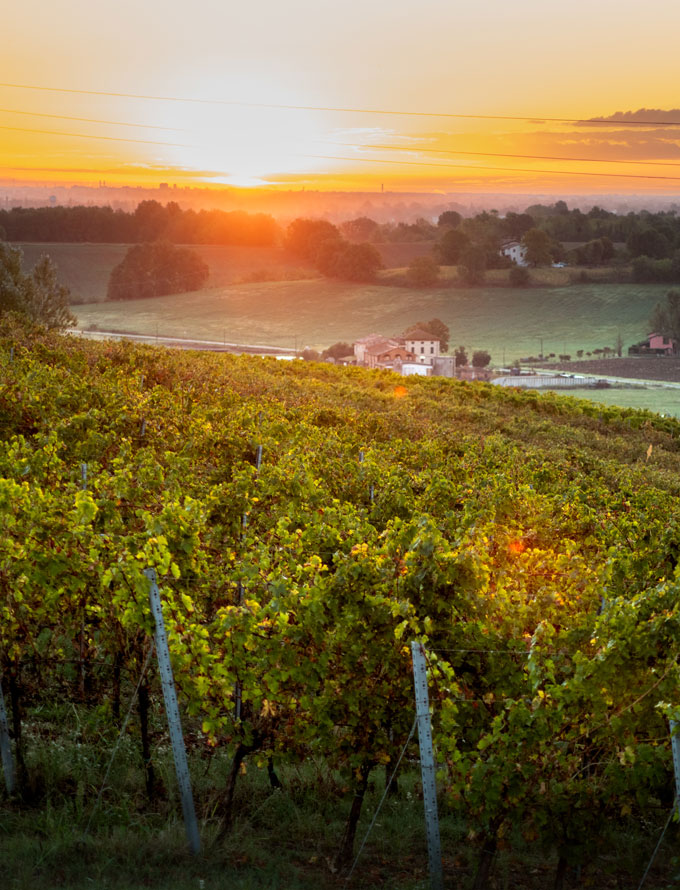
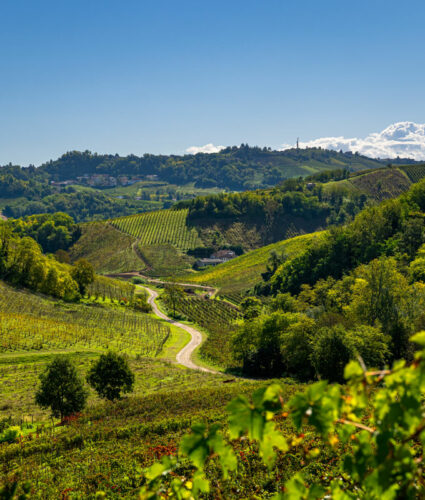
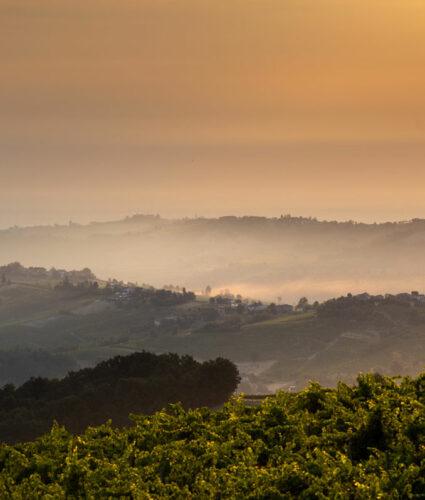
The territory extends from the Po plain to the peaks of the Apennines, up to the 1,724 metres of Monte Lesima, creating a landscape of hills and mountains, sometimes rugged, that has always been home to viticulture.
The wine zone follows the 45th parallel and gathers in four main valleys in the north-eastern part of the area: the Versa Valley, Scuropasso Valley, Coppa Valley and Staffora Valley.
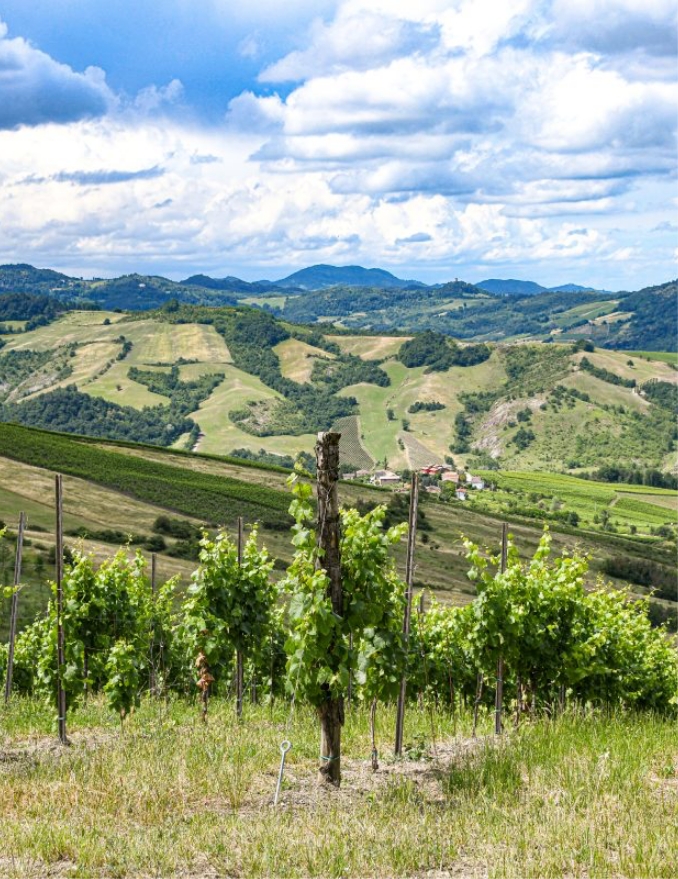
The alternation of fields, woods and vineyards ensures exceptional ecological variety: Oltrepò wine is born in a landscape that preserves biodiversity, where endemic species survive thanks also to numerous protected natural areas.
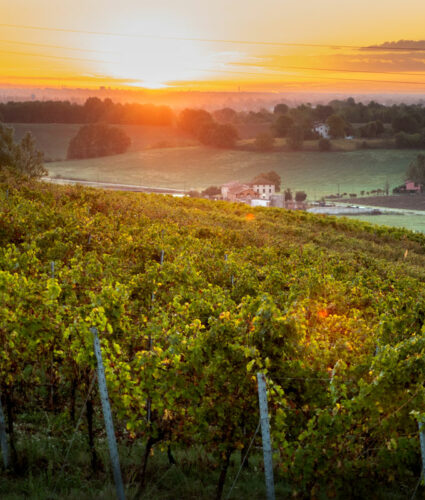
The vineyards lie at elevations ranging from 120 to 550 metres above sea level, occasionally reaching 600 or even 700 metres. Slopes are often very steep, frequently reaching 30%, a visible sign of the land’s dramatic and determined character.
It is on these hillsides climbing the Apennines that Classese is born, the Metodo Classico blanc de noirs from Pinot Noir, along with the other six denominations of Oltrepò Pavese wines.
MEAN VINEYARD ALTITUDE (M)
MUNICIPALITIES


Il territorio vitivinicolo della DOCG e delle DOC è formato dall’interezza dei comuni di:
• Borgo Priolo;
• Borgoratto Mormorolo;
• Bosnasco;
• Calvignano;
• Canneto Pavese;
• Castana;
• Cecima;
• Godiasco Salice Terme;
• Golferenzo;
• Montalto Pavese;
• Montecalvo Versiggia;
• Montescano;
• Montù Beccaria;
• Mornico Losana;
• Oliva Gessi;
• Pietra de’ Giorgi;
• Rocca de’ Giorgi;
• Rocca Susella;
• Rovescala;
• San Damiano al Colle;
• Santa Maria della Versa;
• Torrazza Coste;
• Volpara;
• Zenevredo.
Tale territorio si estende anche in parte dei comuni di:
• Broni;
• Casteggio;
• Cigognola;
• Codevilla;
• Colli Verdi (in particolare le frazioni di Canevino e Ruino, precedentemente comuni integralmente ricadenti nell’areale DOCG e DCO);
• Corvino San Quirico;
• Fortunago;
• Montebello della Battaglia;
• Montesegale;
• Ponte Nizza;
• Redavalle;
• Retorbido;
• Rivanazzano Terme;
• Santa Giuletta;
• Stradella;
• Torricella Verzate.

La più orientale delle valli dell’Oltrepò Pavese è modellata dal torrente Versa, le cui sorgenti si trovano a Moncasacco, nel comune di Alta Val Tidone, appena oltre il confine provinciale. Dopo un breve tratto, in cui segna il confine tra Alta Val Tidone e Colli Verdi, il torrente entra interamente in provincia di Pavia e scende verso la pianura fino a Stradella. La parte meridionale, con altitudini maggiori, mostra calanchi diffusi, mentre a nord i rilievi sono più dolci e regolari. Le quote superano i 600 metri sul livello del mare. I principali centri della valle sono Colli Verdi, Volpara, Montecalvo Versiggia, Golferenzo, Santa Maria della Versa, Montù Beccaria, Montescano, Castana, Canneto Pavese e Stradella.

Valle centrale dell’Oltrepò Pavese, è attraversata dal torrente Scuropasso e dai suoi piccoli affluenti. Le sorgenti si trovano nei pressi di Pometo, nel comune di Colli Verdi. Il corso scende rapidamente in una valle stretta e profonda, con versanti ripidi, attraversando Rocca de’ Giorgi, Montecalvo Versiggia, Montalto Pavese, Canneto Pavese, Pietra de’ Giorgi, Cigognola e Broni, fino a raggiungere la pianura e sfociare nel Po. La parte alta della valle è caratterizzata da rilievi accentuati, mentre la zona verso Broni presenta declivi più dolci. I centri principali includono tutti i comuni citati, a conferma della varietà dei paesaggi lungo il corso del torrente.

Formata da due rami principali, la valle è solcata dal torrente Coppa, le cui sorgenti si trovano a Fortunago, e dal Ghiaie del Coppa, noto anche come Ghiaie dei Risi, che nasce tra Montalto Pavese e Colli Verdi. I due corsi si uniscono a Borgo Priolo, da dove il torrente prosegue verso la pianura fino a Casteggio, per poi confluire nel Po. I rilievi sono moderati e dolci, con quote non elevate. I principali centri della valle comprendono Fortunago, Colli Verdi, Montalto Pavese, Borgoratto Mormorolo, Borgo Priolo, Calvignano, Montebello della Battaglia e Casteggio; nell’area circostante si contano anche Torrazza Coste, Rocca Susella, Corvino San Quirico, Torricella Verzate, Mornico Losana, Oliva Gessi e Santa Giuletta, a testimonianza della rete di piccoli abitati nella valle.

La valle più ampia dell’Oltrepò Pavese è attraversata dal torrente Staffora, che nasce a 1.343 metri alla Fontana di San Giacomo, nei pressi del Passo del Giovà, nel comune di Santa Margherita di Staffora. Il corso scorre inizialmente in un contesto montano, circondato dalle vette dell’Appennino, tra cui Monte Chiappo, Cima Colletta e Monte Boglelio. Dopo Varzi e Bagnaria, le altitudini decrescono e la valle si apre verso la fascia collinare e la pianura antistante Voghera. Le aree coltivate e i principali centri della valle comprendono Cecima, Ponte Nizza, Montesegale, Rocca Susella, Godiasco Salice Terme, Rivanazzano Terme, Retorbido, Codevilla e Torrazza Coste, che rappresentano i punti principali di riferimento lungo tutto il corso del torrente.
La provincia di Pavia è un crocevia di cammini storico-culturali di grande valore. Tra questi l’Oltrepò Pavese Pavese vede il passaggio della Via degli Abati, della Via di San Colombano, di uno dei molteplici rami della Via Francigena, il cui percorso standard attraversa il Po appena oltre, ma che anticamente interessava ampiamente l’Oltrepò, come dimostrano le vicende di pellegrini francesi come San Rocco e San Bovo. Il cammino più importante per l’Oltrepò Pavese, però, è la Via del Sale, il percorso che collegava il Ducato di Milano con il Mar Ligure, il cui itinerario principale percorreva la Valle Staffora per poi svalicare l’Appennino e inoltrarsi in direzione di Genova, Camogli e Portofino. Sulla Via del Sale si svolgeva un ricco commercio di sale e antichi frutti, che unitamente alla produzione e commercio di vino rendeva l’Oltrepò Pavese un notevole snodo per i traffici medievali e, oltre, sino all’età moderna.